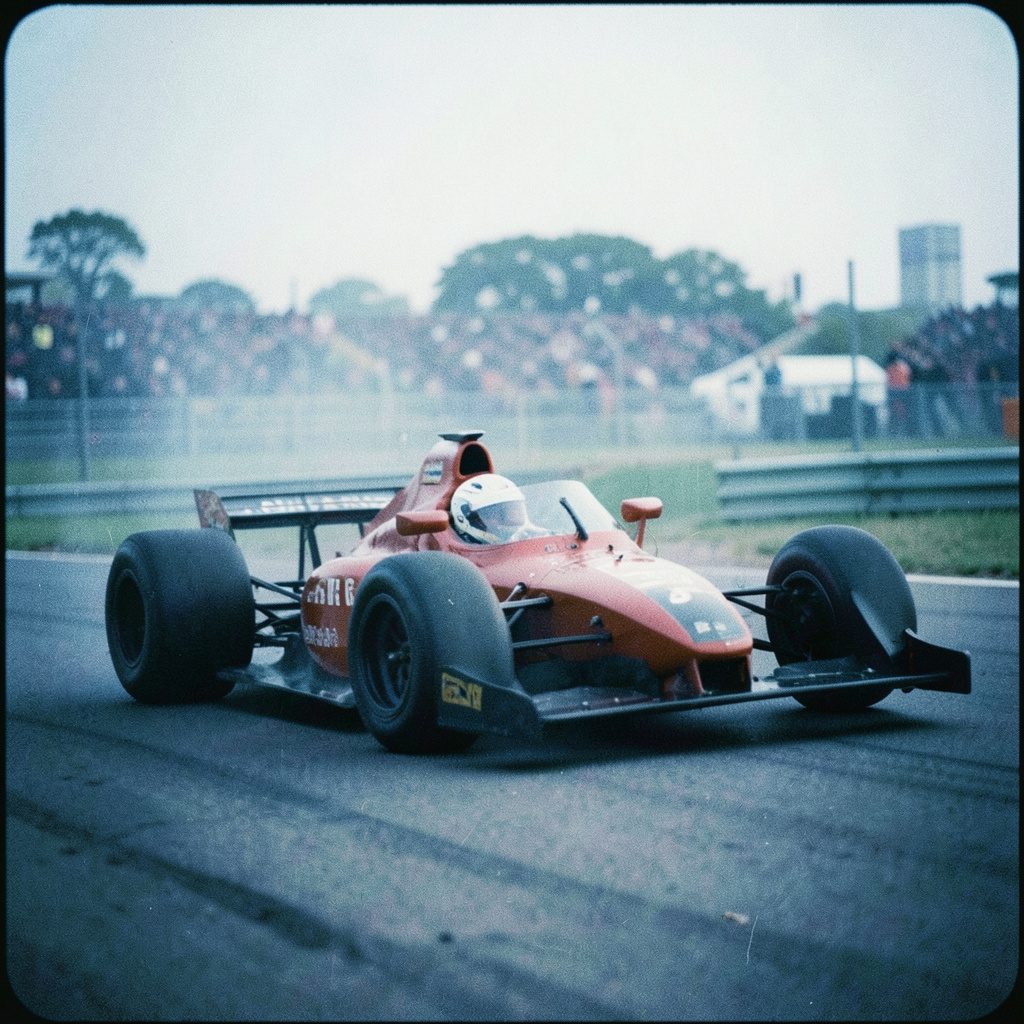
Dial in every slide on a dirt track
Learning how to perfect the drift on dirt tracks is less about holding the handbrake and more about creating a balanced slide the tyres, suspension and throttle can sustain. On loose soil, grip arrives in layers: a hard-packed line offers more purchase, fresh dirt lets the rear step out, and a dusty patch can feel almost greasy. A good run reads those changes early, asks for a modest slide, then settles the car before the next corner.
That makes deliberate practice more useful than constant button-mashing. Learn the controls in a browser racer, choose one corner, and repeat it until the entry speed, brake pressure and throttle lift feel familiar. Keep early laps below the limit and treat a clean exit as a success; confidence should come from control rather than a spectacular spin.
Build a stable car before chasing angle
Start with a forgiving setup rather than the fastest vehicle on the grid. For a dirt course, prioritise balanced weight distribution, responsive steering and enough rear grip to recover from a small slide. If the game offers tyre, suspension or downforce settings, change one value at a time and note whether the car catches oversteer more quickly. Excessive power or stiff suspension may produce a bigger kickback but makes precise opposite-lock corrections harder.
Most browser racers map acceleration to Up or W, braking to Down or S, steering to Left and Right or A and D, and the handbrake to Space or Shift. Some games label the handbrake as a drift or clutch control, so check the controls screen before practising. Keyboard steering needs smaller, deliberate inputs: a full lock can flick the rear outward faster than you expect, while a short tap followed by a return towards the centre is often easier to control.
A useful baseline is a car that can corner cleanly at moderate speed with little slide, then add a brief handbrake input on command. To compare handling styles, browse the new game additions and test a vehicle with clear steering feedback. Record the same corner several times, keeping the same braking point, and look for consistency rather than maximum yaw.
Create the slide, then keep it alive
A tidy drift has four connected phases: entry, initiation, hold and exit. Approach slightly wide, brake as the car turns in, and let the rear begin to rotate before the apex. The important transition happens when the handbrake comes off. Ease the throttle back in, hold enough speed through the slide and point the front wheels where you want the car to travel. A late flick can look spectacular, but it usually costs more time than a measured entry.
Initiate with a quick steering input combined with the handbrake, then release both promptly. As the back end steps out, apply opposite lock: countersteer right in a left-hand slide and left in a right-hand slide. On a keyboard, tap and release the steering rather than holding full opposite lock. If the car rotates too far, straighten the wheels and reduce throttle; if it straightens too early, add a little more power without stabbing the accelerator.
Dust makes timing less predictable, particularly when another car has already broken up the surface. Keep a wider margin, look for a clean strip on the outside, and avoid sudden corrections when the front tyres lose grip. For another browser-based test bed, off-road driving games can help you compare different slide responses. Practice transitions from loose dirt to a firmer line, because that is where many arcade racers lose the rear axle.
Read the track like an Australian dirt circuit
Australian road traffic keeps left, and dirt ovals generally run anticlockwise, so a left-hand oval corner may feel natural after a day behind the wheel. The dirt speedway at Calder Park in Melbourne, regional ovals around Tamworth and rally stages in the ACT or country NSW all provide useful references for different surfaces. Wide entries suit open ovals; narrow bush stages punish late braking, blind crests and a car that is still sideways at the exit.
Local language also makes coaching easier. “Give it a go” means make an attempt, “have a crack” means try it, and “she’ll be right” suggests the situation will probably settle. Australians call the front of the car the bonnet and the rear the boot, while vehicle speed is shown in km/h rather than mph. Using those details in your notes can prevent confusion when an arcade game describes grip, gear or braking in unfamiliar terms.
The bigger local factor is the weather. A hot summer afternoon can turn a fast line into deep dust, while a storm leaves ruts and corrugated sections that unsettle the car. Check whether the game models changing grip, glare or loose surfaces; if it does, reduce entry speed accordingly. If it does not, assume every bend may be slippery. When taking lessons onto real vehicles, use a sanctioned track or private property, never an ordinary public road.
Compare the surface cues before committing to an input:
| Surface or feature | Grip and movement | Better response | Common error |
|---|---|---|---|
| Fresh loose dirt | Rear steps out easily | Steer, brake briefly, then add light throttle | Lifting off at the first slide |
| Hard-packed line | More predictable traction | Use a smaller slide and firmer throttle | Oversteering on entry |
| Deep dust | Lower grip and visibility | Lift early and steer smoothly | Making abrupt corrections |
| Rut or corrugation | The car rocks or pulls to one side | Ease throttle and hold a steady line | Bouncing the steering |
| Crest or jump | Grip briefly becomes light | Keep the car straight and avoid sudden power | Turning heavily in the air |
Build a repeatable practice routine
Drifting improves when the same inputs produce the same result. Choose one slow corner and learn it before moving to a hairpin or fast sweeper. Use clear reference points, such as a marker at turn-in, a clean strip at the apex and a safe point on the exit. The aim is to make the car’s movement predictable enough that you can repeat it with more speed later.
These drills give a useful weekly session:
- Select one corner and mark its entry, apex and exit points.
- Set a baseline lap with gentle steering and no handbrake.
- Add a brief handbrake input at the same braking point each lap.
- Practise one smooth slide, one slide with opposite lock and one recovery.
- Record the lap time, the exit speed and the point where the slide begins.
Progress in small steps. After a clean lap, increase entry speed slightly or try a later throttle response, but change only one variable. If the car snaps into a spin, return to the previous speed and repeat the successful technique. Keep a clean lap as your benchmark and a separate long-slide lap as your control exercise; both skills matter, although they call for different levels of throttle and steering.
Refine your line and recover without panic
A racing line can make a drift feel easier by reducing the amount of correction needed. Enter wide enough to see the next surface change, place the inside wheel near the edge of the usable track and aim the front tyres towards the exit. If the surface is loose, wait until the car is straight before adding power. Chasing a dramatic angle at every corner often produces inconsistent slides and slows the exit.
Watch where mistakes begin. A wide entry calls for less initial steering; a nose-in corner needs an earlier brake release; excessive handbrake means the car is scrubbing speed instead of rotating. When the rear steps out unexpectedly, look through the corner and make one smooth opposite-lock correction. Avoid holding the handbrake or tapping several controls together, since that usually turns a recoverable powerslide into a full spin.
For a competitive test, the site's multiplayer driving mode can add pressure and useful comparison. A rival may take a tighter line or leave softer dust on the track, changing the grip you have on the next lap. Keep the same corner routine in multiplayer, then judge the slide by its exit speed and control rather than by how close the car came to the edge.
A clean dirt drift feels less like a stunt and more like a flowing part of the lap. The rear tyres should move enough to make the corner lively while the nose still points towards the exit. Tune the setup, read the surface, use measured throttle and finish each slide with the car ready for what comes next.
Choose a dirt-ready car at Kizi2games, open a browser circuit and run the five-drill routine on your next lap. Learn one corner, chase a controlled slide, then put your cleanest run against a friend in multiplayer.