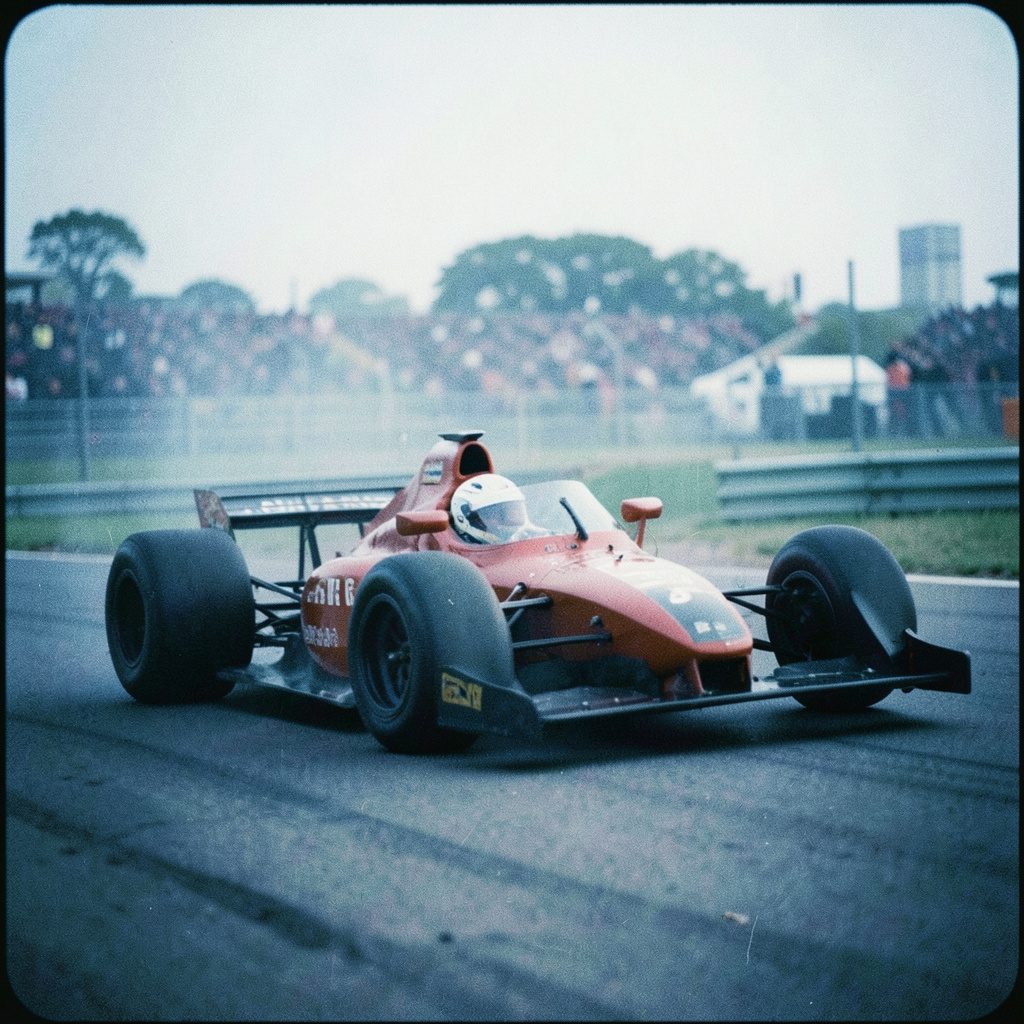
Racing game tracks: Curves and chicanes explained
Racing game tracks can look like bright ribbons laid across a cartoon countryside, yet every bend changes how a car must be driven. A gentle sweep can be taken with firm throttle and small steering inputs, while a tight corner may demand an earlier brake, a slower apex and a careful exit. Understanding the shape of the road turns each track from a sequence of obstacles into a route with a clear rhythm.
The useful starting point is the racing line: the path that places the car where grip, speed and visibility work best together. On many corners, a driver approaches from the outside, turns toward the inside near the apex, then drifts back toward the outside for the exit. That line can be shorter, but it is valuable mainly because it creates room to accelerate after the turn.
A chicane adds a second decision to that rhythm. It is a short sequence of bends, often left then right, with only a brief stretch between them. The first turn can pull the car inward and the second can push it wide, so a driver who enters too quickly may have nowhere to place the car. Reading both turns together is a central skill in racing game tracks.
Curves and corner geometry
Curves are often described by their radius, which is simply how sharply they bend. A broad, constant-radius corner lets a car carry more speed because its path changes direction gradually. A tighter radius needs lower speed and more space for the nose to turn. Banking can add grip, while a narrower road leaves less room for error, so two bends with similar shapes may still need different inputs.
A chicane compresses several ideas into a small area. Its first apex may be entered wide, followed by a quick move across the track for the second apex. The best technique depends on the exit: holding the inside line through both bends might protect the car, but it can leave the tyres pointing awkwardly into the next straight. A slightly wider line can produce a faster exit when the road allows it.
Before reaching any complex section, scan beyond the nearest corner. Track width, barrier position, painted markings, scenery and the road ahead all provide clues about speed and direction. Mini-maps help with orientation, while rumble strips or distant landmarks can act as brake markers. Strategy-focused rounds can reinforce this habit, and the site's strategy game options offer a useful change of pace between races.
Elevation and changing surfaces can alter a bend without changing its outline. A downhill exit may increase speed, an uphill approach can make braking happen sooner, and a patch of loose gravel or wet paint can reduce grip. Read those clues and adjust the plan. A racing game may not model every surface accurately, but noticing changes keeps the habits useful across tracks.
Speed, steering and the racing line
Speed and steering have to work together, especially as a corner approaches. Too much entry speed can make the car run wide as the front tyres lose grip; a sudden stab at the wheel can create understeer, where the car pushes toward the outside. Small corrections are usually easier to control. In a simple browser racer, the usual sequence is brake, turn, then feed in throttle as the nose comes back toward the road.
The apex is the point where the car is closest to the inside of the bend, but reaching it is only one part of the job. The exit determines the next straight's speed. Drivers who aim only for the apex may scrub off speed and become easy targets. A smoother line, balanced steering and an early release of the throttle can create momentum that carries through the following section.
Control layouts also vary between racing games. Some use arrow keys, WASD or a touchscreen, while others offer separate throttle and brake pedals. Australian players are used to keeping left on public roads, so right-hand corners can feel unfamiliar even when the controls are clear. Players who prefer an installed Android build can compare Android game downloads, while checking publisher details, permissions and age guidance before installing anything.
Braking zones and direction changes
Braking belongs mainly before the turn. A long straight gives the tyres time to slow the car in a straight line, while braking during a tight bend uses some grip that the car needs for steering. Mark a braking point from a fixed visual cue, such as a barrier or sign, and begin slowing early enough to reach the desired entry speed without a last-second panic.
Weight transfer helps explain why this matters. As a car slows, its load moves toward the front, giving the front tyres more bite for the initial turn. A controlled trail brake can preserve some stability while the car is already rotating, but it requires a smooth press rather than a sudden stamp. Many casual games simplify this physics, yet the same gentle inputs still produce cleaner laps and fewer spins.
Road habits in Australia reinforce the need for an early response. Australian states and territories use closely related road rules, with posted signs controlling the legal limit. In Victoria, the default built-up limit is generally 50 km/h, while signed school zones commonly use 40 km/h during their posted hours. Speed cameras and restrictions on handheld mobile phones show that responsible driving extends beyond the steering wheel. Virtual racing should stay firmly on the track, never while operating a real vehicle.
Consistency helps more than maximum speed. If the same corner is taken slightly differently on every lap, lap times become difficult to compare and small errors can grow into larger ones. Pick one measurable target, such as reaching the braking marker at the same point, before trying to shave seconds away. In a casual game, repeated clean laps also build familiarity with the track's width and rhythm.
Chicanes, track rhythm and overtaking
Chicanes also create tactical choices. A car can attack from the outside to gain a wider entry, defend by covering the inside line, or use the momentum of another car to create a slipstream before the first bend. Overtaking is not simply about speed at the apex. Position, timing and how cleanly the driver exits often matter more than a dramatic entry.
Australian circuits provide varied examples. Melbourne's Albert Park is a narrow street circuit where walls, kerbs and close corners leave little room for a mistake. Adelaide's street circuit adds tight, barrier-lined sections among city buildings, while Mount Panorama at Bathurst pairs long straights with fast linked bends. Translating those patterns into a game helps players understand why similar-looking corners demand different plans.
For younger players, choosing an appropriate game is as important as mastering the line. The Australian Classification Board applies the National Classification Scheme, and families can check its rating alongside a game's difficulty and content. Australia's casual gaming market includes many free browser and mobile experiences, making quick sessions practical. For a low-friction start, the Kizi2Games browser games collection offers casual racing choices such as Bike Race 2.
Turning theory into better laps
Build speed through a simple routine rather than memorising a lap at full throttle. On the first pass, identify the corner type, note the braking marker and decide where the apex should sit. On the second, concentrate on one input at a time. On the third, combine them and compare lap times. Keeping a short note of each mistake is often more useful than changing several lines at once.
A simple curve rewards consistency, whereas a chicane rewards planning and balance. The comparison below makes the practical differences clear.
| Feature | Simple curve | Chicane |
|---|---|---|
| Typical shape | One continuous bend | Two quick bends with a short link |
| Speed choice | Carry more speed through a broad radius | Slow the first entry enough to handle the second bend |
| Braking focus | Brake before the single turn-in point | Plan braking for the first bend, then avoid locking up during the transition |
| Apex strategy | Use one clear apex and a smooth exit | Balance inside and outside lines across both apexes |
| Main challenge | Holding a steady line | Linking direction changes without losing traction |
Choose a free racing game, find a track with a visible chicane, and mark your braking point before starting. Run three laps with one goal: reach the first apex at a controlled speed and finish the second bend facing the exit. When that sequence feels smooth, carry a little more entry speed and compare the lap times. Record your best clean lap, then try to match it with a consistent run.